
Q3 2025 Strategy & Market Reviews
Each quarter, our Investment Management teams publish their key observations and portfolio updates across Global Equity and Fixed Income markets. This is a summary of our views for the Third Quarter of 2025. You can download the full reports via the links shown below.
KEY OBSERVATIONS
During the third quarter, the S&P500 total return was +8.12% in U.S. dollars. Adjusting for currency, the S&P500 returned +10.47% in Canadian dollars, as the Canadian dollar depreciated 1.65 cents during the quarter to $0.7184. The TSX total return was +12.50% in the third quarter.
Following its September Federal Open Market Committee (FOMC) meeting, the Federal Reserve lowered the federal funds rate by 25 basis points, bringing the new target range to 4.00%–4.25%. This was the first interest rate cut since December 2024. The move signals the Fed’s growing concern over a weakening labour market, even as inflation remains above its 2% target.
Overall, the third quarter was another strong one for corporate earnings, which were up 12.0% year-over-year from an estimated growth rate on June 30th of only 4.8%. This compares to earnings growth of 13.3% in the first quarter, which also beat expectations of 7.2% on March 31st and represents the third consecutive quarter of double-digit earnings growth.
We are encouraged to see that strong performance has broadened out to other areas of the stock market beyond Technology and the Magnificent 7 in the third quarter. This broadening out includes both a more diverse range of industries, as well as smaller companies.
The global economy is proving to be more resilient than initially feared in the face of the tariffs announced by President Trump. We see evidence of this in the outperformance of several countries relative to the U.S. during the third quarter. China, Japan, and Canada all outperformed U.S. equities.
In summary, the combination of stronger economic growth, positive earnings and the US Central Bank cutting interest rates might explain the positive equity performance in the third quarter, particularly in September, which is a period typically known for seasonal weakness. This positive outlook has not really changed and continues to support our constructive view looking forward.
NORTH AMERICAN EQUITY UPDATE
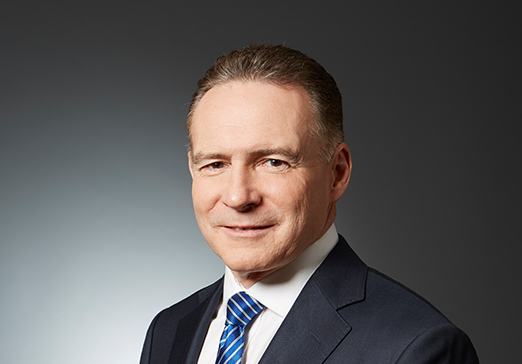
Peter Jackson, HBSc, MBA, CFA
Chief Investment Officer
Portfolio Manager, North American Equities
Our overall equity exposure increased from 93% to 98% while our cash exposure declined from 7% to 2% since June 30th, 2025. Our U.S. equity exposure increased from 53% to 57% and our Canadian Equity exposure increased from 40% to 41% since June 30, 2025.
Given the current market and economic dynamics, we have taken on some new positions, re-entered one old position, and added exposure to two compelling opportunities from commodities.
In our North American strategy, we established the following positions:
UnitedHealth Group is a stock that we exited in late 2024/early 2025 but have re-entered after the returning CEO made sweeping changes to increase transparency and reprice or exit unprofitable lines of business. Earnings were weaker, although price adjusted accordingly, providing a good reentry point. Even at a conservative earnings multiple, significant upside potential from our initial purchase price exists.
Tradeweb Markets is a leading operator of electronic exchanges for fixed-income products like government treasuries and interest rate swaps, which traditionally have traded “over-the-counter” (i.e. non-electronically) rather than on centralized exchanges. The company’s business model, based on transaction fees tied to trading volume, is well-positioned to perform strongly during periods of market volatility.
Bank of Nova Scotia has been in turnaround mode since Scott Thomson took over as CEO in February of 2023. The bank outlined its strategy to fix the bank at its December 2023 investor day and we see signs that the bank is making traction. At the time of purchase, Scotia traded at a discount to its peers and offered a 5.2% dividend yield.
WSP Global is a Montreal-based professional services firm that provides engineering, environmental, and advisory consulting worldwide. They design and manage projects in transportation, buildings, energy, and environmental sectors. Combined with macro trends like Canadian infrastructure spending, U.S. AI data center growth, and North American manufacturing reshoring, WSP is well-positioned for sustained performance.
iShares S&P/TSX Global Gold index ETF was added to benefit from gold’s recent rise above $3,500/oz. The historic seasonality of gold suggests it could push towards $4,000/oz by year-end. Because gold companies generally do not score well in our investable universe due to company-specific risks, we have selected a gold ETF that helps mitigate this risk while still capturing the upside potential of the gold market.
Sprott Physical Uranium Trust was added to capitalize on a global uranium supply deficit of 44 million pounds next year that we see growing to a 1.8-billion-pound cumulative deficit over the next 20 years. The Trust offers direct exposure to physical uranium through a liquid, closed-end structure. Managed by Sprott Asset Management LP, it provides daily transparency on net asset value and holdings.
A detailed review of each company can be found in the full report per the link above.
GLOBAL EQUITY UPDATE

Phil D’Iorio, MBA, CFA
Portfolio Manager, Global Equities
Global stock markets generated strong gains during the third quarter of 2025. The key drivers for global equities included expectations of interest rate cuts, strong corporate earnings, economic resilience across major global economic regions, strong liquidity, and risk-on sentiment. Increased confidence was also a key contributor as it appears that investors have become less fearful of the impact from President Trump’s tariff policies.
The Magnificent Seven contributed to the market gains in the U.S. with an average return of 17.8% during the third quarter. Having said that, there was a wide divergence in performance among the Magnificent 7. For example, Meta and Amazon were relatively flat during the quarter while Alphabet and Tesla were up 38% and 40% respectively. All major developed market regions generated positive gains during the quarter, with Canada and Japan leading and Europe lagging.
An economic environment where central banks are cutting interest rates and a recession is avoided has historically been favourable for stocks. So far, this is the backdrop that we find ourselves in, and one of the major factors that drove equities higher in the most recent quarter. Strong corporate earnings also provided a tailwind to global stocks markets.
The global economy is proving to be more resilient than initially feared in the face of the tariffs announced by President Trump. In the United States, gross domestic product for Q2 2025 was recently revised upwards to 3.8% from an estimate of 3.3% previously. Globally, the past two months have seen the strongest back-to-back expansions of global services output seen so far this year. Furthermore, the August increase in factory output was the largest recorded for 14 months, and one of the best performances seen since the pandemic.
Bringing it all together, we have a cautiously optimistic outlook for global equities. Most of the largest global central banks have been cutting interest rates while many governments around the world are maintaining or expanding their deficits. In addition, we have low energy prices, a capex supercycle led by investments in artificial intelligence, and de-regulation in the United States. We believe this backdrop is favourable for global equities.
In our Global strategy, we established the following new position:
KKR is an alternative asset manager that operates across various asset classes including private equity, real estate, infrastructure, and credit. KKR is a global leader with over $3.0 trillion in assets under management, and is particularly well positioned to benefit from the recent U.S. executive order that calls for expanded access to private equity and other alternative investments for 401(k) plans and their participants.
In our International strategy, we established the following new position:
Euronext is a leading European capital markets infrastructure company, covering the entire capital markets value chain, from listing, trading, clearing, settlement and custody, as well as solutions for issuers and investors. We believe that Euronext is well positioned to benefit from Europe’s resurgence that should unfold in the years ahead on the back of large stimulus announcements that were recently made in Germany.
A detailed review of each company can be found in the full report per the link above.

Owen Morgan, MBA, CFA
Portfolio Manager, Fixed Income
The primary drivers of fixed income returns this past quarter were changes in yields, a shift in the shape of the yield curve, and movements in corporate bond spreads.
First, yields. The third quarter saw worsening employment data, particularly in the US. Domestic GDP data also weakened, with the Bank of Canada estimating that the domestic economy contracted by approximately 1.5% in the second quarter (as of this writing the Q3 GDP data has not been released). As a result of the fragile Canadian economy, and with inflation remaining within acceptable parameters, the central bank lowered its Overnight Lending Rate by 25 bps to 2.50% on September 17th. This marked the first rate cut following several meetings with no changes.
This brings us to the shape of the yield curve, which is now almost fully upward sloping. This means it is returning to “normal,” with shorter terms bonds yielding less than the longer term bonds. Shorter terms are influenced heavily by expectations for monetary policy (in this case, more rate cuts), while longer-term issues are more subject to fiscal and macroeconomic factors (expectations of government borrowing needs, economic growth and inflation). Lower yields are a tailwind for fixed income performance, and this was the case last quarter.
As for corporate bond spreads, they got tighter during the quarter. This indicates that investors judged that the riskiness of non-investment grade bonds has decreased. As spreads narrow, bond prices increase, and this had a modest positive impact on corporate bond prices.
With regards to the positioning of the Cumberland Income Fund, we do not anticipate extending the portfolio’s duration, reflecting our assessment of mid- to long-term yield dynamics and our expectation for a modest decline in near-term interest rates. Although the recent tightening in corporate credit spreads has been a positive development, we do not hold a high degree of conviction that this trend will persist given the prevailing softness in domestic economic conditions.
Our preference is to maintain the portfolio’s current positioning which includes a balance of defensive / short-to-mid duration holdings and some selected higher-beta bonds to bolster returns. We remain cautiously constructive on fixed income.
A detailed review of each company can be found in the full report per the link above.


